
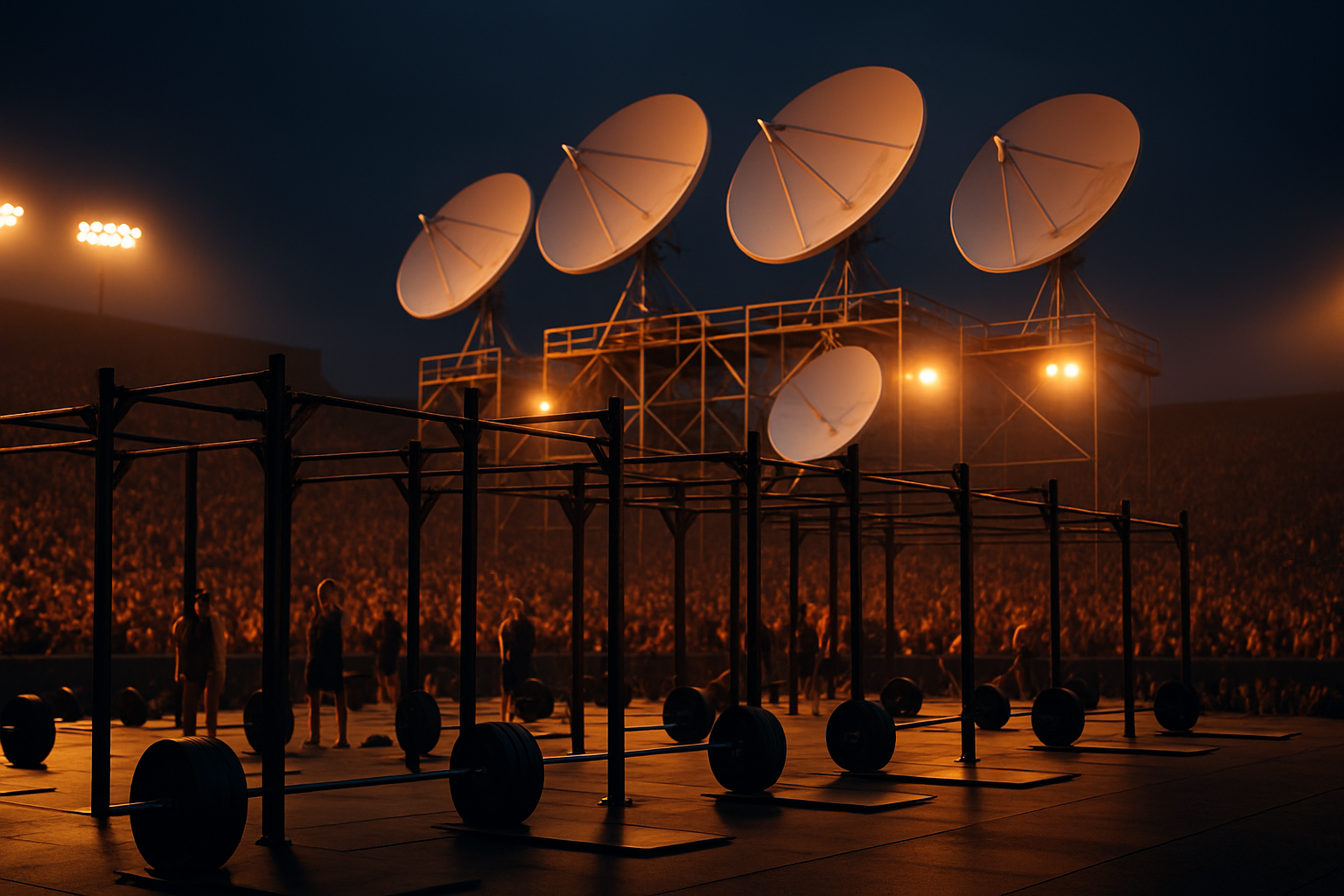
A major fitness competition rolled into a Chicago venue in 2025 with the connectivity problem every large event shares: thousands of athletes and spectators, registration and live timing that cannot go down, and a venue whose infrastructure was never built for it.
The build
West Networks bonded six Starlink terminals with cellular into a single SpeedFusion tunnel. No one link had to carry the event; all of them did, together. As individual dishes and cell links wobbled under load and weather, Dynamic Weighted Bonding shifted traffic to whatever had headroom.
The result
Registration and live timing stayed up through the whole event. This is the distinction that matters on show day: not “we have a backup” (failover), but “we don’t go down” (bonding). A backup implies a moment of failure you recover from. Bonding means the moment never comes, because the workload was already spread across every path.
For an event, that is everything. You cannot ask 5,000 people to wait while a link reconnects. The network either holds or it doesn’t — and bonded, it holds.
If your disaster-recovery plan includes the word “failover,” you’re doing it wrong.
SpeedFusion internet bonding means increased performance, more uptime, and no failover — because the session was already riding every link.
Own your network. Peplink hardware is bought once and it lasts — it keeps bonding and routing with or without an active warranty or the cloud. No forced subscriptions, no required licenses.
Learn the fundamentals at connectivity101.com.
Leave a Reply